
Worried that high tariffs on Chinese furniture will destroy your profit margins? You see competitors growing with Chinese imports, but the fear of hidden costs is holding you back.
To import beds from China to Lithuania profitably, focus on the total landed cost, not just the 0-6% tariff. Sourcing from Northern China can save you over 15% on the factory price, which easily covers the duty and significantly boosts your profit margins. This is the key.
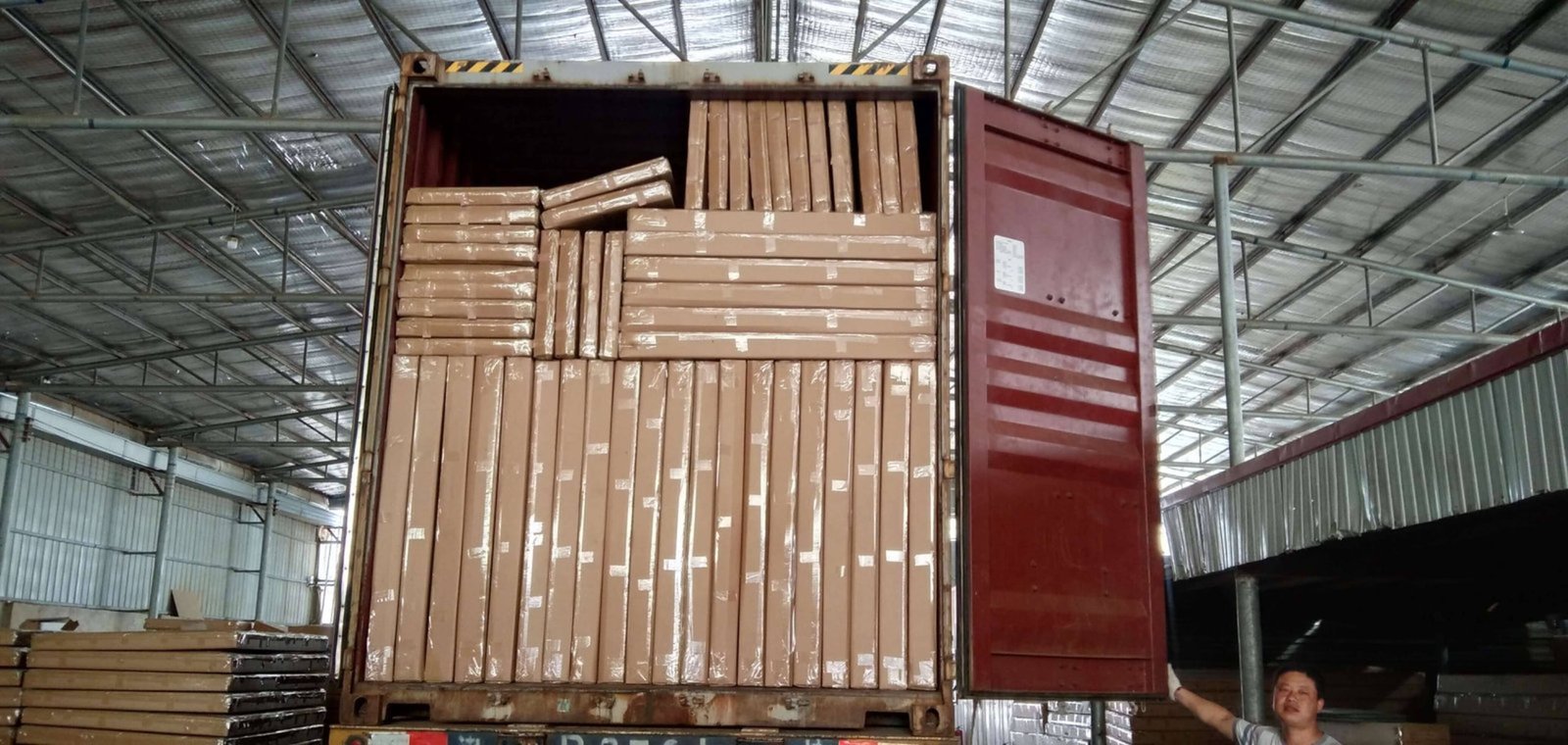
I’ve been in this business for years, helping many Lithuanian buyers transition from sourcing in Poland or Ukraine to sourcing from China. Almost every new partner, like Edvinas from Kaunas, starts with the same concern: "Sara, what about the tariffs?" They are always surprised when I tell them the tariff is the least of their worries. The real strategy isn't about avoiding a small tax; it's about making smart decisions that make that tax feel tiny. Let's break down how you can do it.
Can a 15% price drop really beat a 6% tariff?
It sounds too good to be true, right? You might think a lower factory price will just get eaten up by shipping and taxes. You're right to be skeptical, but let's do the math.
Yes, a 15% lower factory price from Northern China easily beats a 6% tariff. This initial saving directly covers the duty and leaves an extra 9% or more in your pocket as pure profit. This is why smart Lithuanian retailers are making the switch.
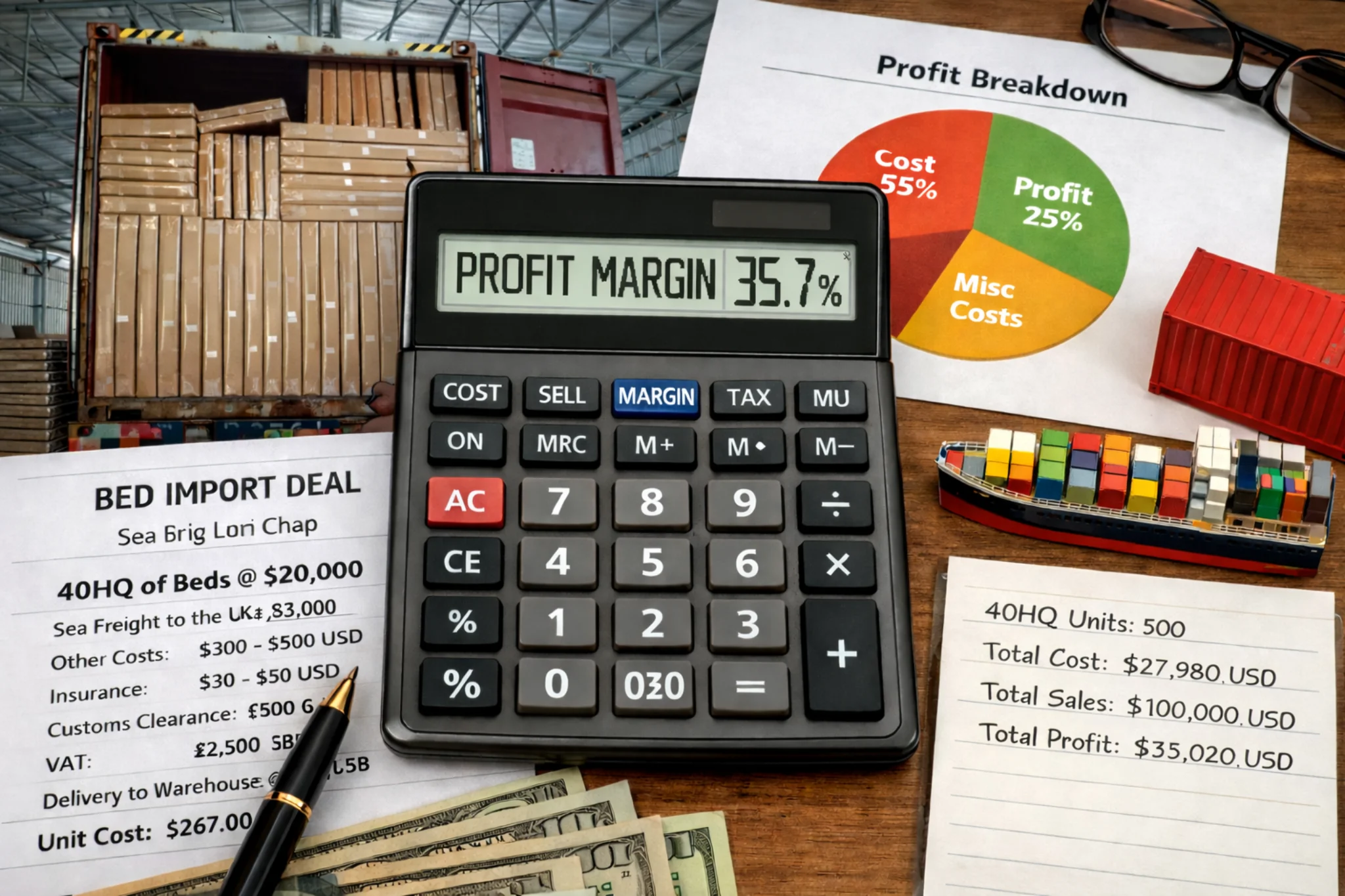
When you look for suppliers in China, you'll find two main manufacturing hubs: one in the South and one in the North, where my factory, DIKAPABED, is located in the Bazhou Shengfang industrial belt. For years, I've insisted to my clients that for upholstered beds, the North is the better choice for European markets. The reason is simple: our production costs are significantly lower. We are talking about a price difference of 15% or more for the exact same quality bed. This isn't a trick; it's just a reality of regional economics in China. This 15% saving is your secret weapon against tariffs.
Let's look at a real-world example:
| Cost Factor | Sourcing from Southern China | Sourcing from Northern China (DIKAPABED) |
|---|---|---|
| Factory Price per Bed | $100 | $85 (15% cheaper) |
| Tariff (e.g., 6%) | $6.00 | $5.10 |
| Cost Before Shipping | $106.00 | $90.10 |
| Your Extra Profit | - | $15.90 per bed |
As you can see, the 15% lower price doesn't just cancel out the tariff; it leaves you with nearly $16 of extra profit on every single bed compared to sourcing from the South. This is how your competitors are offering great prices and still making a healthy margin.
How can you lower shipping costs to offset tariffs?
High sea freight from China to Klaipėda is a real expense. You might worry that this cost alone will make each bed too expensive to be competitive, wiping out any savings.
You can dramatically lower your per-unit shipping cost by choosing fully Knock-Down (KD) bed frames. This design lets us load far more beds into a single container, cutting the freight cost for each bed in half and protecting your profit margin from tariffs.
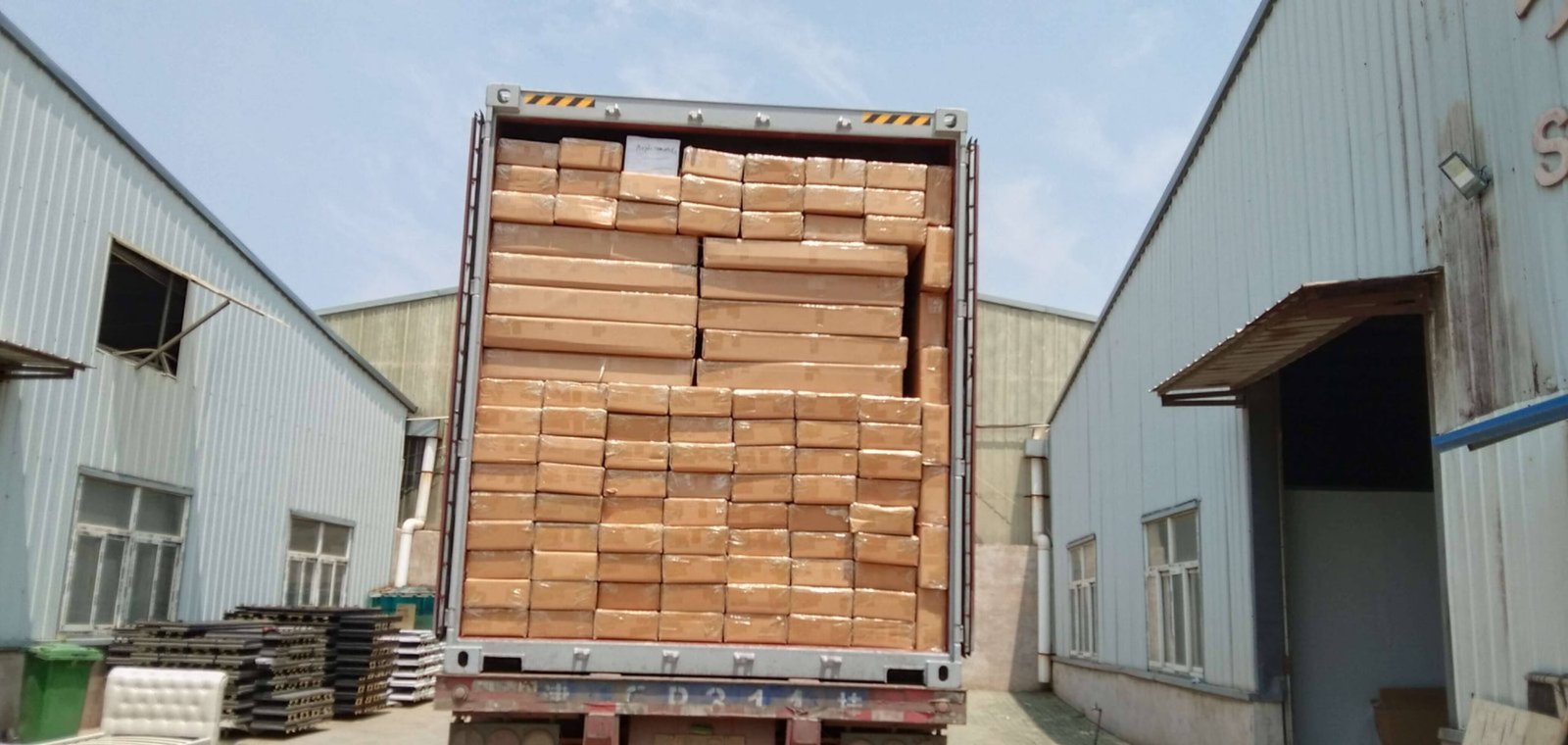
The landed cost of your bed is determined by the factory price plus the shipping cost. While we can't control the price of a shipping container, we can control how many beds we fit inside it. This is where "Knock-Down" or KD design becomes critical. All our upholstered beds at DIKAPABED are designed to be fully disassembled and flat-packed. This means every part—the headboard, the side rails, the slats—is packed efficiently to take up the least possible space. Other factories might only offer semi-KD products, where parts are pre-assembled, taking up much more room.
The difference this makes is huge. For my Eastern European clients who need to mix 2-3 models in various sizes (140/160/180x200cm), this is the only way to make it work financially.
Here’s how the numbers stack up for a standard 40-foot High-Cube container:
| Shipping Factor | Semi-Assembled Bed | Full KD Bed (DIKAPABED) |
|---|---|---|
| Loading Quantity (40'HC) | ~100 units | ~180-200 units |
| Assumed Freight Cost | $4,000 | $4,000 |
| Freight Cost Per Bed | $40 | $20 - $22 |
| Shipping Cost Saving | - | ~$18-$20 per bed |
This saving of around $20 per bed goes directly to your bottom line. When you add this to the savings from the lower factory price, the 6% tariff becomes a very small, manageable business expense.
You have probably heard horror stories about huge, unexpected anti-dumping taxes on Chinese goods. This fear alone can be enough to stop you from even talking to a Chinese supplier.
No, there are no hidden anti-dumping duties on the upholstered bed frames and curved wooden slats that are popular in the Lithuanian market. While some Chinese furniture is affected, our products have specific customs codes with a standard, competitive tariff rate of 0-6%.
This is one of the biggest myths I have to clear up for new partners. It's true that the EU has anti-dumping measures on some Chinese products, like certain steel tubes or specific categories of wooden furniture. However, these are very specific. Upholstered bed frames, which are beds covered in fabric or leather, fall under their own HS (customs) code. This category is not currently subject to anti-dumping duties in the EU. The same goes for the curved wooden slats used in our bed bases, a specialty of our region.
Furthermore, our Northern China industrial belt has a massive price advantage on gas-lift storage beds. These are incredibly popular in Europe for their functionality. Our cost to produce these is so low that you could gain absolute pricing power in the Lithuanian market. You could be significantly cheaper than competitors sourcing from Poland or Turkey and still have a better profit margin. I always tell my clients, "Your competitor, MB Guru baldai, is likely using this exact strategy." We always verify HS codes before shipping to guarantee you have no bad surprises at customs. It's my job to ensure your import process is smooth.
What is the biggest financial challenge and how do you solve it?
You need a lot of cash to run an import business. You have to pay for the goods, the shipping, and all the taxes upfront, which can put a huge strain on your finances.
The biggest financial challenge isn't the small customs tariff; it's Lithuania's 21% import VAT. The best solution is using VAT deferment, which lets you account for the VAT on your regular tax return instead of paying it in cash at the port.
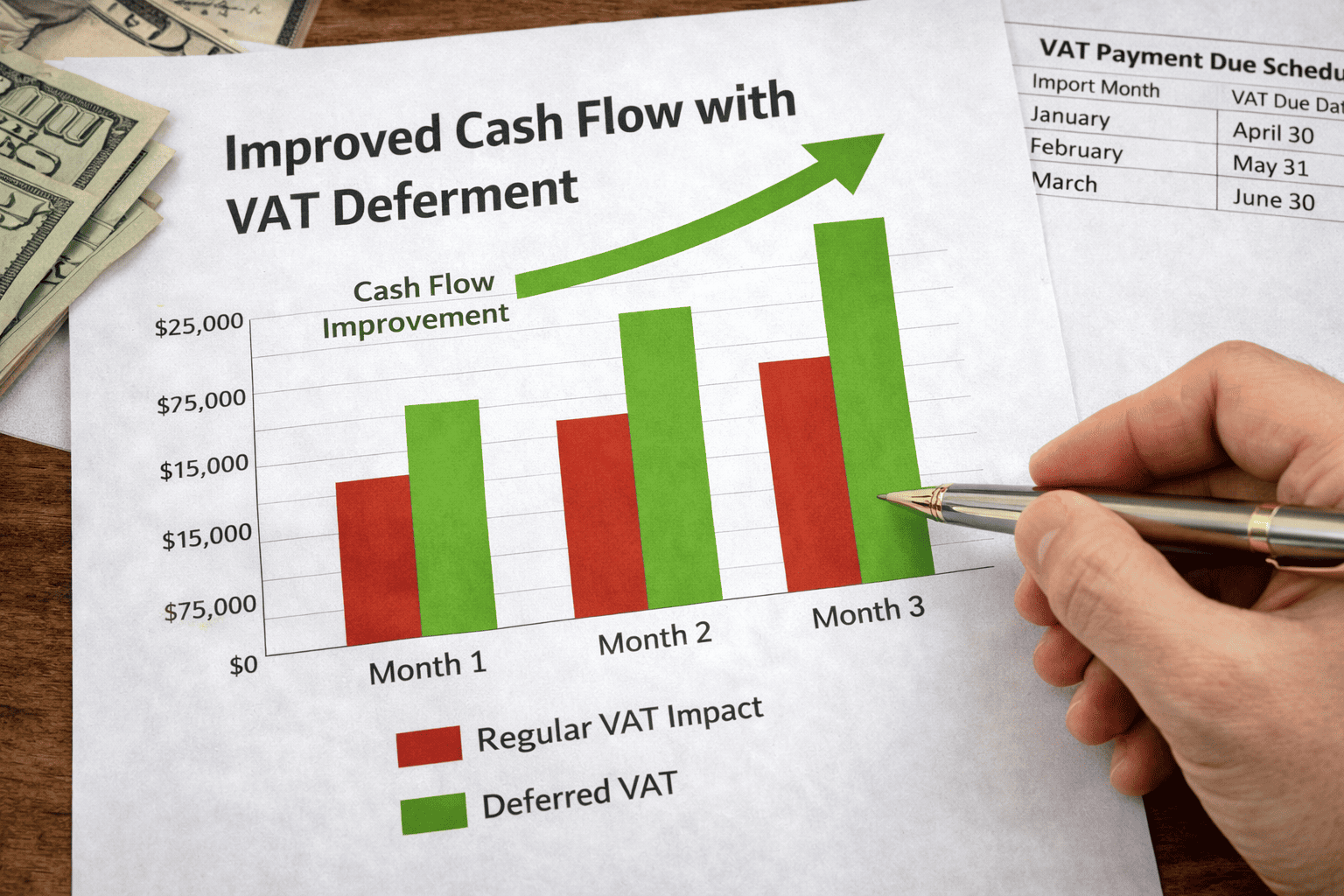
Let's be clear: the real financial pressure point for any importer in Lithuania is the 21% Value Added Tax (VAT). On a €20,000 order, that's €4,200 in cash you have to pay to customs the moment your goods arrive, on top of the product cost, shipping, and the small tariff. For a growing online retail business like miegok.eu, that cash is better spent on marketing or holding more stock.
Luckily, there is a simple, legal solution that all my experienced European partners use: VAT deferment (also known as postponed VAT accounting). Instead of paying the 21% VAT in cash at the port, this system allows you to simply declare it on your next VAT return. As you sell the beds to customers in Lithuania, you collect VAT. The import VAT you declared is then offset against the VAT you collected. The result? You don't have to pay that huge sum out of pocket.
| Payment Method | Upfront Cash Needed at Customs | Cash Flow Impact |
|---|---|---|
| Standard VAT Payment | Product Cost + Shipping + Tariff + 21% VAT | Very High Pressure |
| VAT Deferment | Product Cost + Shipping + Tariff | Much Lower Pressure |
This is the number one strategy I recommend to any new Lithuanian partner. It's a total game-changer. It frees up thousands of Euros in working capital, reduces your risk, and allows your business to grow much faster. This is far more impactful to your business than worrying about a 6% tariff.
Conclusion
Importing beds from China is not about fearing tariffs. It's about smart sourcing, efficient logistics, and savvy financial planning to maximize your profits and ensure your business grows.
