
Buyer Guide · Fabric & Colour
Fabric that
sells. Colour
that holds.
Every upholstered bed begins with a fabric decision. This guide covers material types, durability metrics, swatch confirmation, colour variance, batch consistency and MOQ implications--so your specification is clear before production starts.
confirms the colour
Why fabric specification matters
The surface your customer touches first--and reviews longest.
Fabric choice affects perceived quality, retail photography, durability complaints, cleaning instructions and packing requirements. A confirmed specification at the sample stage protects every shipment that follows.
Define it once. Reference it every order.
A confirmed fabric article code, colour code and approved physical swatch become the standing reference for samples, mass production and repeat orders.
Same look. Same hand. Every container.
Batch-to-batch colour and texture tolerance is confirmed against the approved swatch. Deviations are flagged before loading, not after delivery.
Fabric choice shapes MOQ and loading.
Fabric collection, roll availability and colour minimums interact with your order quantity. Understanding this early prevents surprise constraints at quotation stage.
Common fabric types
Six materials. Different feel, different fit.
Velvet
Short, dense pile with a soft hand and light-catching sheen. High visual appeal in photography; requires directional care to maintain appearance. Popular in UK and European retail.
Boucle
Looped yarn construction with a textured, tactile surface. Strong contemporary market positioning; less susceptible to directional marks than velvet. Confirm loop stability and pilling resistance.
Linen & Linen-look
Flat weave with visible slub texture. Clean, understated aesthetic that photographs well across price points. Natural linen blends offer a premium hand; linen-look polyester provides better consistency and lower cost.
Chenille
Soft, ribbed yarn with a warm, cosy hand. Good durability for the weight; verify pilling performance on specific articles. Works well in warm and earthy colour palettes.
Corduroy
Parallel raised ridges (wales) in a pile weave. Distinctive visual texture with directional light response. Confirm wale width and pile direction consistency across panels and batches.
PU & PVC Leather
Smooth or embossed surface with a leather-like appearance. Easy to clean; confirm backing weight, abrasion resistance and cold-crack performance for the destination climate. Popular in hospitality and contract markets.
Durability metrics explained
Numbers that mean something at the point of complaint.
Martindale rub cycles are the standard durability reference for upholstery fabrics. Understanding what the numbers mean--and what they don't--helps set realistic expectations with end customers.
Swatch & colour code workflow
A colour code is a starting point. A physical swatch is the contract.
Fabric collections are referenced by article code and colour code. These codes identify the correct roll--but colour perception varies between screens, print and physical material. The approved swatch resolves all ambiguity.
Choose from the collection
Select a fabric collection and colour direction. Article codes and colour codes are provided for reference and ordering. Screen representations are indicative.
Approve a physical swatch
A physical swatch is sent for approval. Once signed off, it becomes the binding colour and texture reference for the entire programme. Any deviation during production is flagged against this reference.
Confirmed code on every document
The approved article code and colour code appear on the PI, production order, QC checklist and packing list. This ensures traceability from order placement through to shipment.
Screen colour variance
Why catalogue colours are always indicative.
Screen rendering
Monitor calibration, colour profile (sRGB vs P3), brightness and ambient lighting all affect how a fabric colour appears on screen. The same digital image can appear noticeably different across devices.
Photography and print
Product photography involves lighting choices, post-processing and print reproduction that shift perceived colour. Catalogue and website images are useful for style direction but cannot define a confirmed colour.
Fabric dye lots
Even within the same article code, dye lots can show minor variation. The approved physical swatch--not a previous order's photograph--is the reference for each production run.
Batch confirmation process
Same specification. Every container.
Fabric batch consistency is one of the most common sources of quality complaints in upholstered furniture. A clear confirmation process at each stage prevents surprises at delivery.
Sample approval
The first physical sample is produced using the confirmed article code and colour code. The approved sample--with the retained swatch--becomes the mass production reference.
Pre-production fabric check
Before cutting begins, the incoming fabric roll is checked against the approved swatch for colour, texture and weight. Deviations are flagged before production proceeds.
In-line QC
Surface quality, pile direction (for velvet and corduroy), stitching consistency and panel alignment are checked during production. Issues are corrected before the bed is assembled.
Pre-shipment inspection
Finished goods are inspected against the approved sample, confirmed specification and packing requirements. Inspection photographs are shared before loading.
MOQ and fabric availability
Colour choice shapes order minimums.
Fabric collections have their own roll availability and minimum cut lengths. Understanding how fabric minimums interact with your order quantity prevents commercial surprises at quotation stage.
Colours within collection
Selecting a colour from an established collection with good roll availability typically has no separate fabric minimum--the bed MOQ applies.
Less common colours
Colours with lower demand may require a minimum fabric cut length. This is confirmed at quotation stage against current stock and roll availability.
Custom or exclusive colour
Exclusive colour development or dyeing to a specific reference requires a feasibility review, minimum yardage commitment and development lead time.
Multiple colours, one container
Mixed-colour containers are supported where each colour meets its individual minimum. Total container loading is planned against model dimensions and packing.
Cleaning, care & packing protection
Protecting the surface from factory to final room.
Dry cleaning and vacuuming
Most upholstery fabrics--particularly velvet, boucle and chenille--should be maintained with a soft brush or upholstery attachment vacuum. Avoid rubbing pile fabrics, which can permanently flatten or distort the surface texture.
Spot cleaning
Spot clean with a lightly dampened cloth and mild detergent. Always test on a hidden area first. Do not saturate the fabric; excess moisture can cause shrinkage, watermarks or mould in foam-backed constructions. PU and PVC surfaces can be wiped clean with a damp cloth.
Light and heat exposure
Prolonged direct sunlight causes fading in most fabric types. Confirm light fastness rating for the intended placement. Avoid placing upholstered beds adjacent to radiators or heat sources, which can dry out and crack PU/PVC surfaces.
Packaging protection during transit
Upholstered surfaces are protected with non-woven fabric wrapping, foam corner protection and outer carton. Velvet and pile fabrics receive additional protection to prevent pile compression or scuffing during loading and transit.
Care label and instruction requirements
Care symbols and cleaning instructions on the product label should reflect the confirmed fabric. Label language, symbols and format can be reviewed for the destination market. UK and EU markets have specific requirements for care labelling.
Packing method, carton construction and protective materials are confirmed as part of the product specification. Packing can be reviewed for the sales channel--including online retail requirements where surface damage on delivery is a primary complaint driver.
Related upholstered beds
Models where fabric specification applies.
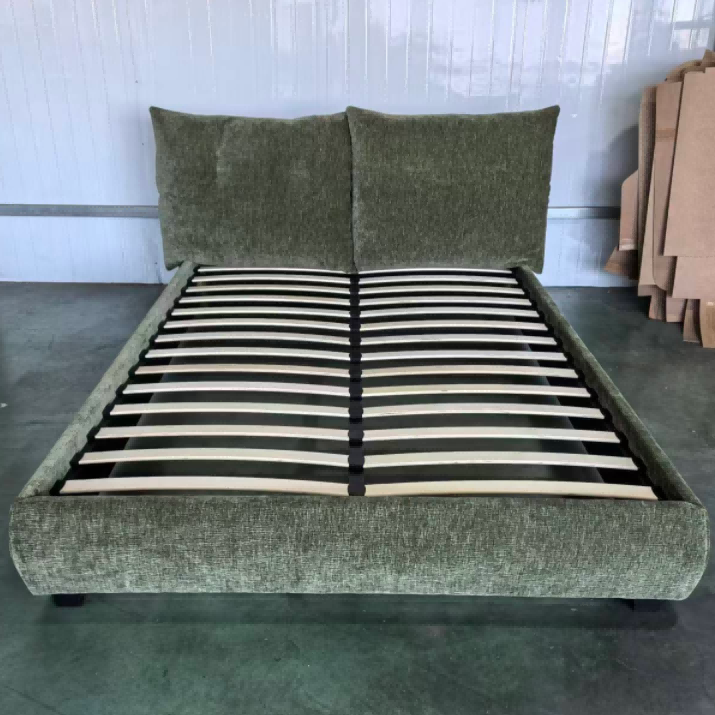 Configurable
Twin-Cushion Curved Gas Lift Storage Bed
For retailers looking for a softer storage-bed silhouette, the twin-cushion headboard and curved profile create a relaxed look...
View product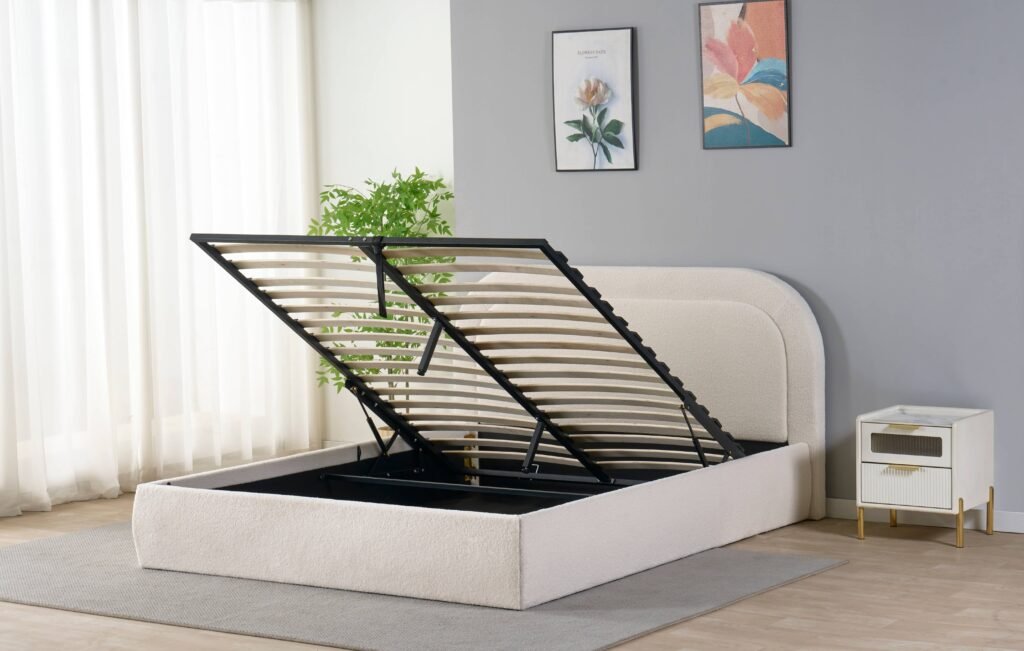 Configurable
Rounded Headboard Gas Lift Storage Bed
Use the rounded headboard to add a softer contemporary direction to a gas-lift storage-bed range.
View product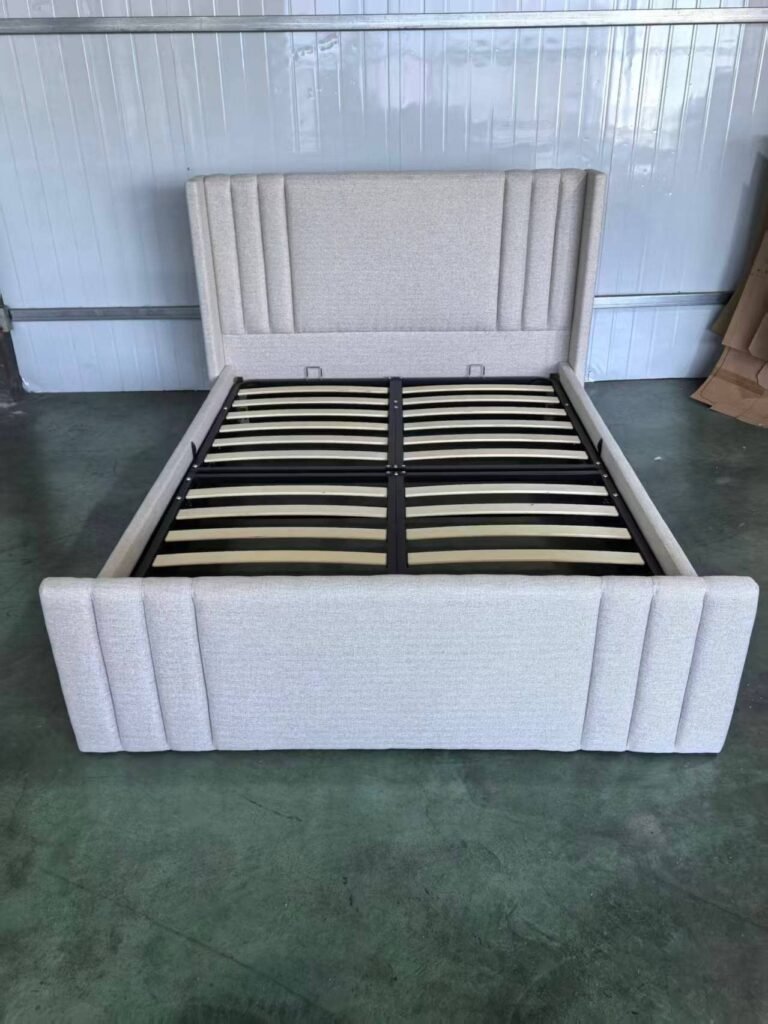 Configurable
Tall Winged Upholstered Bed Frame
Use the tall winged headboard to create a stronger upholstered-bed statement with practical gas-lift under-bed storage. Two common...
View productAdjacent sourcing resources
Related guides for your specification process.
Headboard Design Options
Height, thickness, panel rhythm and upholstery treatment options for upholstered headboards. Understand what can be adjusted within a confirmed construction and what requires a development review.
Read guideGas Lift & Storage Systems
Mechanism types, operating direction, weight ratings and confirmation process for gas lift storage beds. Understand how storage specification interacts with fabric and packing choices.
Read guidePackaging & Container Loading
How upholstered bed packing methods, carton dimensions and container loading quantities are confirmed. Includes mixed-container planning and online retail packing requirements.
Read guideBed Leg Options
Profile, material, finish and practical clearance considerations for upholstered bed legs. Confirm compatibility with the selected bed construction and fabric direction.
Read guideWood Slat Systems
Curved vs straight slats, birch vs poplar/mixed birch, slat width and spacing. Understand how slat specification affects mattress compatibility and container loading.
Read guideSample Development Process
How the sample process works from brief to approved reference--including fabric confirmation, structural review, timing and cost. Covers when sampling is required and when it is optional.
Read guideStart your fabric specification
Request swatches around your programme--not a generic catalogue.
Share your product direction, target market and colour preference. We can then confirm which fabric collections are available for the model, provide physical swatches for approval and give a quotation basis that reflects your actual specification.