
Different Beds.
Different Sizes.
One Container Plan.
Mix different bed-frame models, colours and sizes — or combine bed frames with mattresses. We review each SKU's MOQ, actual carton data and loading feasibility before confirming your order plan.

What can you mix?
You can combine different bed frame models, colours and sizes, or combine bed frames with mattresses in one container. Bed frames and mattresses do not need to be matching sets.
How is MOQ counted?
For this programme, each bed-frame model × colour × size is a separate 50-set SKU. Each mattress model × size is a separate 50-piece SKU. Different SKUs cannot be combined to meet one another's MOQ.
Does 50 sets mean one container?
No. Fifty sets is the minimum production quantity for one bed-frame SKU, not the total container order. Your full order combines multiple confirmed SKUs and is planned against the agreed 20GP, 40GP or 40HQ loading requirements.
Start with the models connected to this buying guide.
These published products are selected automatically from the product categories and features assigned to this page in WordPress.


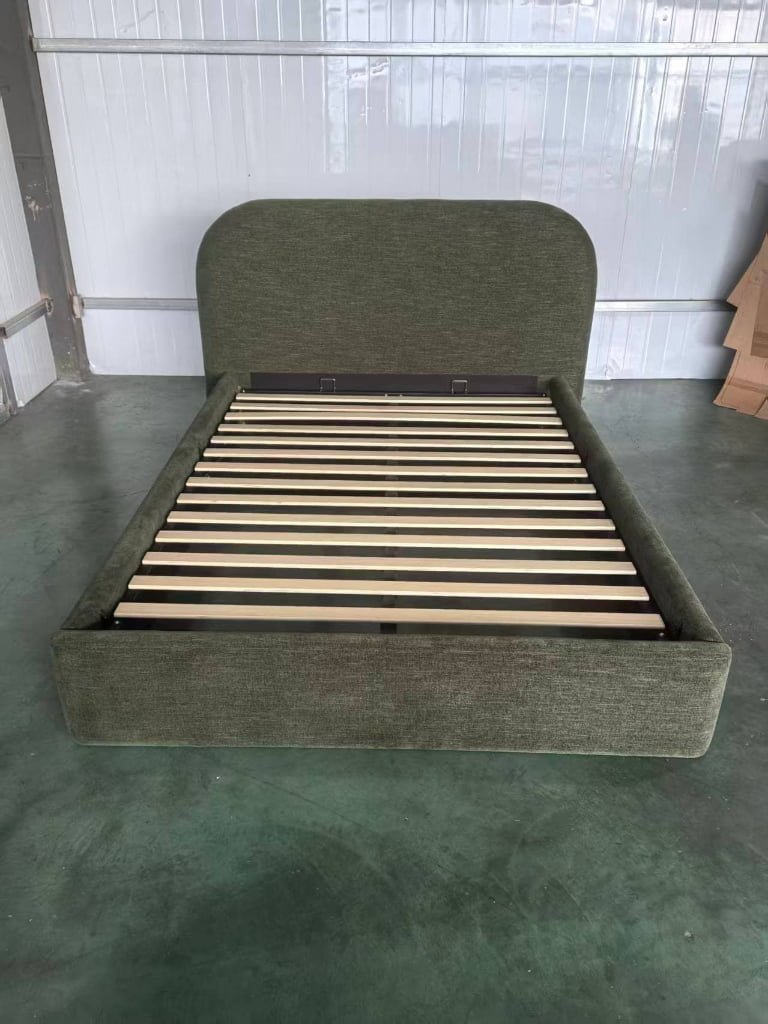
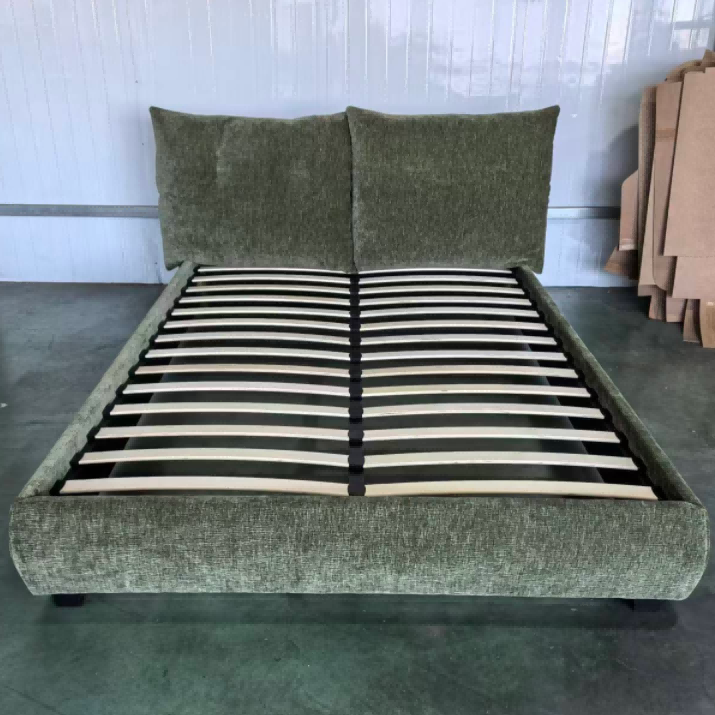
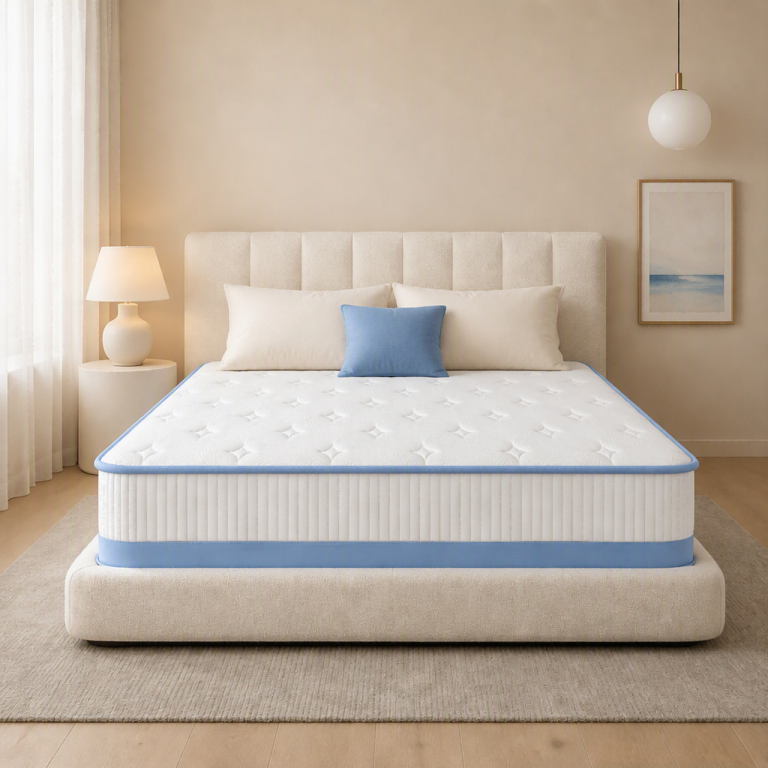
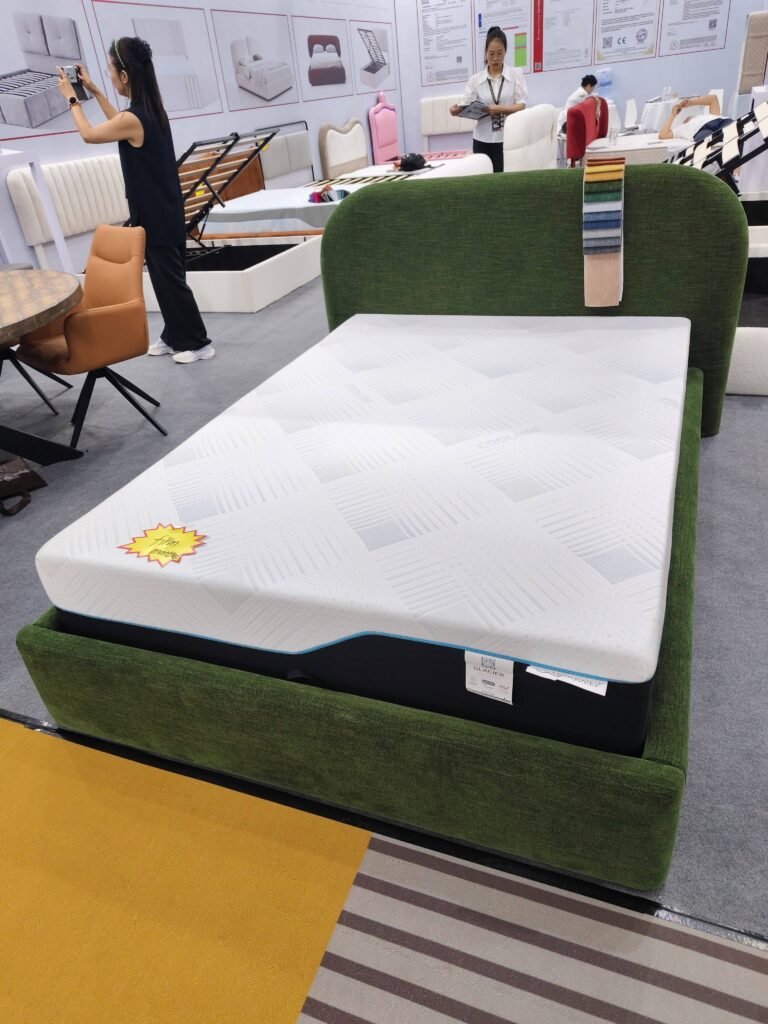
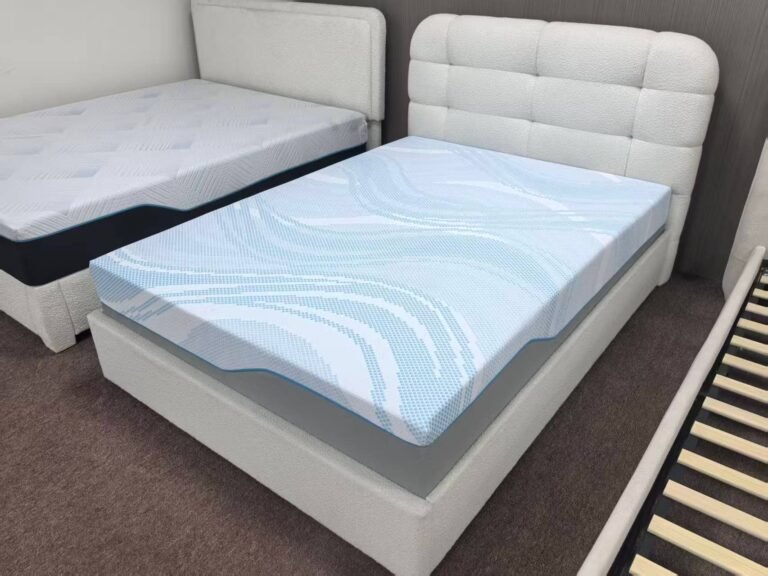
Two ways to build your container assortment.
Choose products independently according to your market, sales channel and buying plan. Bed frames and mattresses do not need to be matched as sets.
Different models, sizes and colours.
Combine upholstered beds, storage beds and selected metal bed models. Each model × colour × size combination is counted as a separate SKU.
Two product lines. One container.
Select bed frames and mattresses independently. Each bed-frame SKU and each mattress SKU must meet its own MOQ and pass the loading review.
Mix your selection.
Keep each SKU at 50.
For this mixed-container programme, upholstered beds, storage beds, metal beds and mattresses each follow a 50-set / 50-piece MOQ per individual SKU.
Each model × colour × size combination is a separate SKU. Mattress models and sizes are also counted separately. Bed-frame and mattress quantities cannot be combined to meet MOQ. These are SKU-level MOQ examples, not a complete container order or a loading guarantee. The overall purchase must meet the agreed full-container order plan.
Build around core models. Leave room to test.
If you're adding bed frames to your range, we can help you build your first assortment around core models while reserving a smaller share for market testing.
For an initial discussion, you can consider 3–5 core models, 2–3 colours per model and sizes focused on your market's main demand. We review the actual mix with you using your sell-through data, target market, channel, price positioning and available carton data. These percentages are an assortment reference, not a share of container volume, a fixed rule or a sales guarantee.
If you already sell beds or mattresses, we can review your current best sellers, gaps in your range, competitor specifications and replenishment needs. If beds are new to your business, tell us about your existing customer base, sales channel, target retail position and budget so we can discuss a first assortment with you.
50 per SKU.
One full-container order.
Shipments planned in stages.
If you want to place a full mixed-container order but do not want to receive every confirmed unit at once, we can review a split-shipment arrangement across multiple SKU lines. This is part of your overall full-container order — not a standalone 50-set order.
For each eligible SKU, DIKAPABED produces the full confirmed MOQ quantity: 50 sets for a bed-frame SKU or 50 pieces for a mattress SKU. For example, one eligible bed-frame SKU may have 50 sets produced, with 30 allocated to the first shipment and 20 finished sets held for the next shipment. The same principle can be reviewed across eligible SKU lines in your larger full-container order. The 50-set example is not the total order quantity and does not itself make up a container.
The next shipment is normally planned for the following month; a short extension may be discussed. No storage charge applies to the held balance under this specific approved arrangement. The number of SKUs, quantities allocated to each shipment and container loading feasibility are reviewed across the whole order.
How the split-shipment arrangement works
This is a confirmed full-container purchase order covering multiple SKUs — not an order for only 50 sets, and not an order for 30 sets with an undecided balance. The 50-set MOQ applies separately to each model × colour × size SKU. The order's total quantity and container plan are calculated from all confirmed SKUs and actual carton data. The required container type (such as 20GP, 40GP or 40HQ) and shipment stages are agreed in the PI; this arrangement does not automatically mean two complete 40HQ containers.
- You confirm the full-container order, every SKU quantity and the agreed allocation for the first and next shipments.
- Production is arranged for the full confirmed MOQ quantity of each eligible SKU (50 sets per bed-frame SKU or 50 pieces per mattress SKU under this page's stated MOQ rules).
- The 30% deposit is calculated on the full confirmed order covering both planned shipment stages.
- For an eligible bed-frame SKU, an example allocation is 30 sets in the first shipment and 20 produced sets held for the next shipment. Mattress allocation is confirmed separately in pieces. The full shipment mix is planned across all order SKUs.
- The second shipment is normally planned for the following month; a short extension can be discussed.
- The remaining balance is paid before arrival according to the payment schedule written into the PI.
We assess eligibility based on your order value, product mix and production feasibility. We record the final terms, SKU allocation, shipment dates and payment milestones in your confirmed PI / order documents. This arrangement is not automatic for every enquiry.
Loading plans start with actual carton data.
CBM is one input. Carton dimensions, carton count, shape and stacking also affect the practical loading arrangement.
What we calculate
We review the selected SKU list against the packaging data available for each product.
- Carton length × width × height
- Number of cartons per SKU
- CBM per carton and total CBM
- Carton shape and stacking arrangement
- Practical container space and loading sequence
What happens if the mix does not fit?
If your initial SKU allocation does not fit the available container space, we will suggest quantity or assortment adjustments. You review and approve the revised allocation before we confirm the plan.
- Review the affected SKU quantities
- Suggest a revised allocation across the containers
- Recalculate the packaging and loading plan
- Confirm the final order list with you
Each SKU is managed separately. The container is checked as one order.
Different products share a shipment, but we keep production, QC and packaging traceable to your confirmed order lines.
SKU confirmation
Model, size, colour, quantity, specification and packing are confirmed for each SKU.
Separate production
Each SKU follows its own confirmed production requirements and schedule.
QC & packaging
Each SKU is checked and packed according to its product and order requirements.
Final carton check
Before loading, product quantities and carton counts are checked against the order list.
Know what to prepare — and what gets confirmed.
We review each enquiry individually. The information needed depends on whether you are still selecting products or already have a SKU list.
If you need product recommendations
Share enough about your business for us to discuss a suitable product mix.
- Target market
- Sales channel and price positioning
- Current product range
- Product categories of interest
- Approximate purchasing budget and container type
If you already have a SKU list
Send the details needed to check MOQ, quotation and loading feasibility.
- Model / product reference
- Colour and size for each SKU
- Quantity per SKU
- Customization or packaging requirements
- Preferred container type and shipment plan
Agree the details before production.
Review your requirements
We confirm your target market, sales channel, budget or initial SKU list.
Confirm SKU mix
Review model, colour, size and the 50-set / 50-piece MOQ per SKU.
Check cost & packing
Confirm FOB quotation, carton data, CBM and container feasibility.
Approve order terms
Record quantities, specifications, payment milestones and shipment allocation in the PI.
Our standard trade arrangement is FOB with your nominated forwarder; other arrangements can be discussed separately. The usual lead-time reference is 30 days for standard products and 45 days for customized products, subject to the confirmed specifications, order schedule and production review. Production starts according to the confirmed PI and agreed payment / production arrangements. Mixed-container planning time is assessed case by case.
See how we handle your order.
We use approved factory, packaging and container-loading photographs, together with anonymised explanations of actual mixed-order experience. Customer names, PIs, quotations and private order details are not published.
Evidence to review before you place an order
Ask us for the relevant product, packaging, QC and loading photographs for your selected models. You can also review published case studies for examples of our order-planning and execution approach. We do not publish customer names, PIs, quotations or private order details.
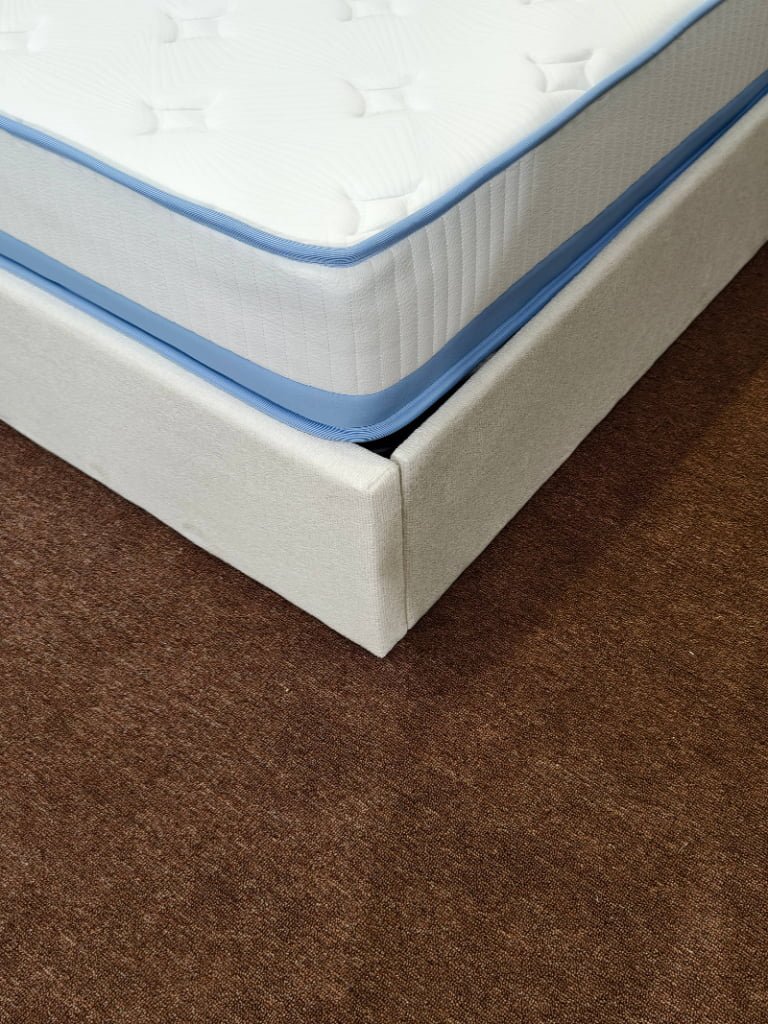 Published case study
Clarifying Mattress Fit and Fabric Choices for a Romanian Bed Order
Read the case study ↗
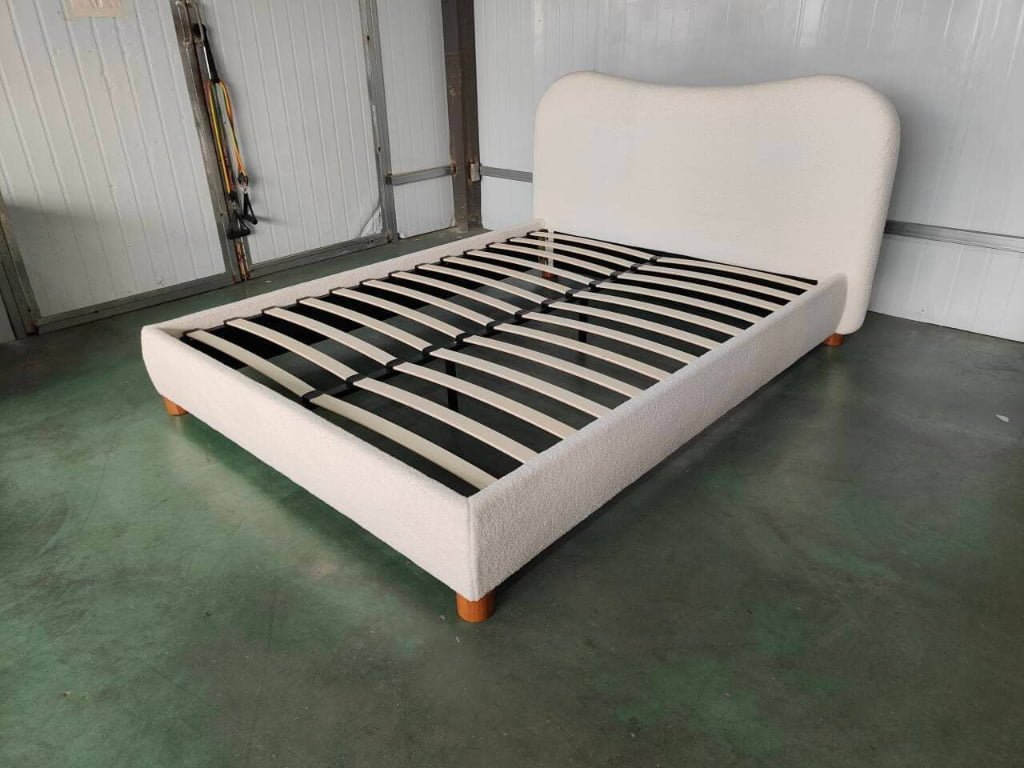 Published case study
Approving a First Upholstered Bed Container for Lithuania
Read the case study ↗
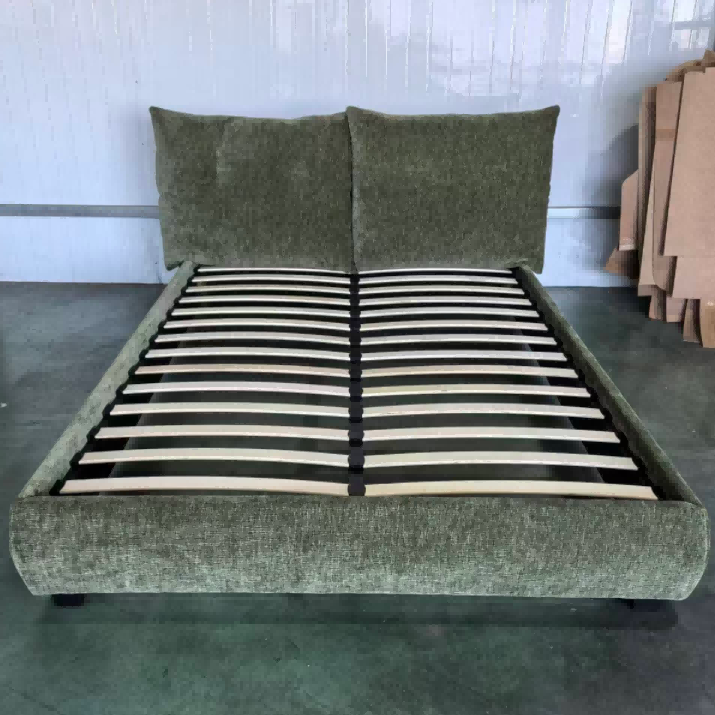 Published case study
Adapting a Custom Headboard Design for a Lithuanian Retailer
Read the case study ↗
Mix standard models with custom requirements — after review.
Existing models and supported options can be planned alongside custom items, but new development needs separate confirmation.
Existing & configurable models
Choose published models and review supported adjustments such as fabric, colour, bed legs, wood slats or bed base options. Availability depends on the selected model.
Complex custom / OEM / ODM
New structures, materials, mechanisms, drawings or special packaging require technical feasibility, sample needs, cost, MOQ and production-stability review before acceptance. Lead time is confirmed for the specific project.
Questions you may have.
Can I mix different bed models, colours and sizes?
Yes. Different models, colours and sizes can be combined. Each model × colour × size combination is a separate SKU and follows its own 50-set MOQ.
Can bed frames and mattresses be mixed in one container?
Yes. You can select bed frames and mattresses independently; they do not need to be matching sets. Each bed-frame SKU has a 50-set MOQ and each mattress SKU has a 50-piece MOQ.
Does a 50-set MOQ mean I only need to order 50 sets?
No. 50 sets is the minimum for each individual bed-frame SKU (model × colour × size), not the total order quantity. A mixed-container order normally combines multiple SKUs and is planned against the agreed full-container requirement.
Does the 30 + 20 example mean a 50-set order?
No. It illustrates how one eligible SKU's 50 produced sets may be split between shipment stages within a larger, confirmed full-container order containing multiple SKUs. The complete order and each shipment load must be planned and confirmed in the PI.
How long does it take to receive a mixed-container plan?
We assess each enquiry individually. Planning time depends on the number of SKUs, product selection, custom requirements and whether complete carton data is available.
How do you check whether my mixed order fits a 40GP or 40HQ?
We review the carton length, width and height, carton quantity for each SKU, total CBM, carton shape and stacking arrangement. We then assess practical loading feasibility for the container type you request. Total CBM alone is not a loading guarantee.
Can I mix standard and customized bed frames?
Yes, subject to review. Existing models and supported options can be planned with custom items. New structures, materials, mechanisms, drawings or special packaging need a separate technical and production-feasibility review, including specification, sample needs, MOQ, cost and production stability.
What are your usual production lead times?
The usual reference is 30 days for standard products and 45 days for customized products. The actual schedule is confirmed after the product specifications, order quantity and production requirements are reviewed.
How is the shipment arranged?
Our standard trade arrangement is FOB with your nominated forwarder. Shipment stages, container type, loading allocation, payment milestones and delivery schedule are confirmed in the PI. Other trade arrangements can be discussed separately.
Planning your order with a furniture manufacturing and export team.
The guidance on this page reflects DIKAPABED's stated mixed-order process and product-planning approach. Review the company and team background before discussing your order.
Where are you in your buying process?
Start with product advice if you are still selecting. Send your SKU list if you already know what you want to buy.
I haven't selected my products yet.
Share your target market, sales channel, price positioning, current product range and budget. We can review a suitable product combination with you.
I already have my SKU list.
Send model numbers, sizes, colours, quantities and any custom requirements. We will review MOQ, FOB pricing, carton dimensions, CBM and loading feasibility.
Mixed-container planning and split-shipment arrangements are confirmed order by order. Final SKU quantities, specifications, payment milestones, production schedule and shipment dates must be stated in the approved PI / order confirmation.