
First container SKU planning
Plan your
first container
with precision.
A structured approach to selecting market, sizes, colours, SKU ratios, and container loading for buyers placing their first bed frame or mattress order from China.

Why the first container matters
One container sets the data baseline for everything that follows.
The first shipment is rarely the most profitable. Its real value is the sell-through rate, complaint pattern, size preference, and colour feedback it generates. Buyers who plan this container deliberately--rather than filling it with whatever is available--consistently build stronger second and third orders.
This guide covers every decision in sequence: market selection, sales channel fit, mainstream sizes, colour and fabric strategy, core versus test SKU ratios, bed frame and mattress pairing, MOQ management, container loading optimisation, and the review data you should collect before reordering.

Container = your market data engine. Plan it as a learning investment.
Step 1 -- Market selection
Choose your primary market before choosing your SKUs.
Market determines size standards, compliance requirements, colour preferences, sales channel dynamics, and the competitive price band. Attempting to serve multiple markets with one container usually results in a SKU mix that fits none of them well.
United Kingdom
Strong online furniture retail, established storage bed demand, and UK-specific size standards make this the most natural starting point for a first container. Fire compliance (FFSR) must be confirmed for upholstered products.
Germany
Large furniture market with strong near-shore competition. EU continental sizes apply. REACH formaldehyde limits and GPSR compliance are mandatory. Higher quality expectations at mid-market price points.
France
Sizeable market with distinct size preferences (140×190 common). EU compliance applies. Online furniture retail is growing. Near-shore competition from Southern European suppliers is a factor to benchmark.
Netherlands
High online penetration and logistics hub position. EU sizes. Buyers tend to be price-efficient and operationally structured. Can be combined with Germany in a mixed container at a later stage.
Romania / Lithuania
Emerging import markets with growing middle-class furniture demand. Lower compliance complexity than Western EU. Useful for testing price-competitive SKUs or building a secondary market position.
Sales channel first
Market selection is inseparable from channel. Online retail, independent retailers, and wholesale distributors have different requirements for packing, assembly, compliance documentation, and SKU depth.
Step 2 -- Size selection
Concentrate on mainstream sizes. Avoid spreading the first container too thin.
UK Size Programme
| Size name | Mattress fit (mm) | Priority | Notes |
|---|---|---|---|
| Double | 135 × 190 | High | Most common UK seller |
| King | 150 × 200 | High | Strong online demand |
| Single | 90 × 190 | Medium | Lower AOV, useful for range |
| Small Double | 120 × 190 | Medium | Flat share / compact bedroom |
| Super King | 180 × 200 | Low-Medium | Premium segment; verify demand |
EU Continental Size Programme
| Size name | Mattress fit (mm) | Priority | Notes |
|---|---|---|---|
| 160 × 200 | 160 × 200 | High | Most common EU double |
| 180 × 200 | 180 × 200 | High | EU king equivalent |
| 140 × 200 | 140 × 200 | Medium | France, Belgium preference |
| 90 × 200 | 90 × 200 | Medium | EU single standard |
| 120 × 200 | 120 × 200 | Low | Specific markets only |


Step 3 -- Colour & fabric
Neutral tones move. Statement colours teach you what your customer actually buys.
For a first container, the safest strategy is to anchor 60-70% of volume in proven neutral colourways--grey, oatmeal, cream, charcoal--and use the remaining 30-40% to test one or two directional tones.
Fabric type affects price, feel, photography performance, and complaint rate. Velvet and boucle photograph well and command higher perceived value. Linen-effect and chenille are more forgiving in varied lighting. Confirm physical swatches before production; screen and catalogue colours are indicative only.


Step 4 -- SKU ratio strategy
Balance proven volume against controlled discovery.
A first container should generate actionable data, not just fill a warehouse. The 60/20/20 framework gives you enough core volume to cover costs while leaving room to test two or three new directions.
Proven models in mainstream sizes and neutral colours. These are your highest-confidence SKUs--products you expect to sell through within 8-12 weeks. Prioritise models with available samples, confirmed specifications, and known loading quantities.
Complementary models or size extensions that round out the range. These have good potential but less certainty than core SKUs. Use them to cover adjacent demand--a single size, an alternative headboard style, or a firmer mattress option.
New models, directional colours, or emerging fabric types. Keep quantity low--enough to photograph, list, and gather real customer response data. A test SKU that fails to sell still provides valuable information for the second container.

Step 5 -- Bed frame & mattress pairing
A paired container increases basket value and simplifies the customer journey.

Gas lift upholstered storage bed
The highest-demand category for UK online retail. Storage function justifies a higher price point and reduces comparison shopping on frame-only listings. Confirm gas lift mechanism, headboard height, fabric, and slat system per model.

Pocket spring / hybrid roll-packed mattress
Roll packing dramatically increases loading efficiency and simplifies last-mile delivery. Pocket spring and hybrid constructions are mainstream in UK and EU mid-market. Confirm spring count, foam layers, firmness, thickness, and fabric before production.
Step 6 -- Container loading
Loading efficiency directly affects your landed cost per unit.
A 40HQ is the standard container for bed frame and mattress imports. The actual number of units you can load depends on model, size, packing method, and assortment mix. Loading quantities should never be assumed--request a confirmed loading plan before finalising the order.
Roll-packed mattresses load significantly more efficiently than bonnell or open-coil alternatives. KD (knock-down) bed frames load better than pre-assembled units. Both decisions have a direct impact on FOB cost per unit.

Standard container for bed frame and mattress imports
Knock-down packing maximises loading density
Vacuum roll-packed mattresses load at higher density
Trade term. Customer arranges forwarder and freight
Step 7 -- MOQ management
MOQ is a starting point, not a fixed constraint.
Minimum order quantities exist for production efficiency reasons. They are influenced by total order value, container capacity, material procurement, and the relationship between buyer and supplier. Benchmarks below are indicative--confirm actual MOQ per model.
Sets per model per colour. Higher-complexity or configurable models may carry higher minimums. Confirm per model.
per SKU
Each SKU must individually meet its MOQ. The container combines multiple qualifying SKUs--it does not reduce individual minimums.
Units per model per size. Roll-packed models may have different minimums. Confirm per specification.
Factors that influence MOQ flexibility
Step 8 -- Inventory management
Plan the reorder before the container arrives.
The most common first-container mistake is waiting until stock runs low before placing the second order. Production plus ocean freight typically requires 60-90 days of forward planning. Build a simple reorder trigger based on your expected weekly sell-through rate and the lead time to your warehouse.
For an online retailer, the key metrics to track from day one are: weekly units sold per SKU, return and complaint rate by model and size, and stock cover in weeks. These three numbers determine whether you reorder, adjust the SKU mix, or pause a line.
Standard lead time (confirmed spec)
Customised lead time (new config)
Trade term, customer forwarder
Step 9 -- Review data
Collect these data points before placing the second order.
The first container is a structured market test. Its value is maximised only if you collect the right data systematically and use it to make a more confident second-order decision.
Rate by SKU
Units sold ÷ units received, per model, size, and colour. The single most important metric for the second container decision.
Return rate & reason
Categorise returns by reason: damage, wrong size, quality, firmness, or change of mind. Each category has a different fix.
Customer feedback themes
Assembly experience, packing condition, fabric quality, and size accuracy are the most actionable review themes for a supplier conversation.
Damage & missing parts
Record by SKU and carton position. High damage rates indicate a packing specification problem, not a product quality problem.
Receive & inspect
Record any damage or missing parts on arrival. Photograph and log by SKU.
Track sell-through
Weekly units sold per SKU for the first 8-12 weeks. Note size and colour ranking.
Collect feedback
Categorise customer reviews and returns by theme. Share relevant feedback with the supplier.
Review & adjust
Identify which SKUs to increase, maintain, reduce, or drop. Adjust size and colour mix.
Place second order
Confirm updated specification, adjusted quantities, and any packing or quality improvements before PI.
Reference products
Priority models for a first container.
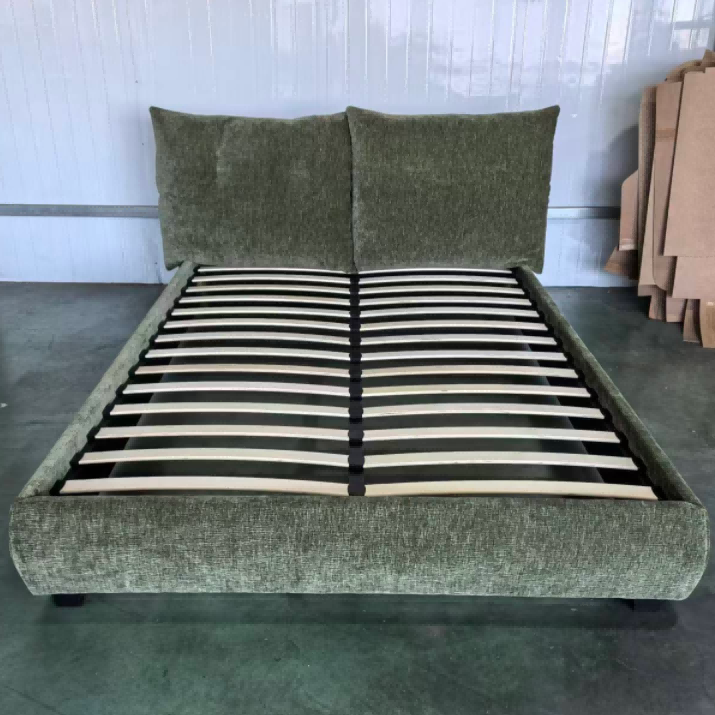 Configurable
Twin-Cushion Curved Gas Lift Storage Bed
For retailers looking for a softer storage-bed silhouette, the twin-cushion headboard and curved profile create a relaxed look...
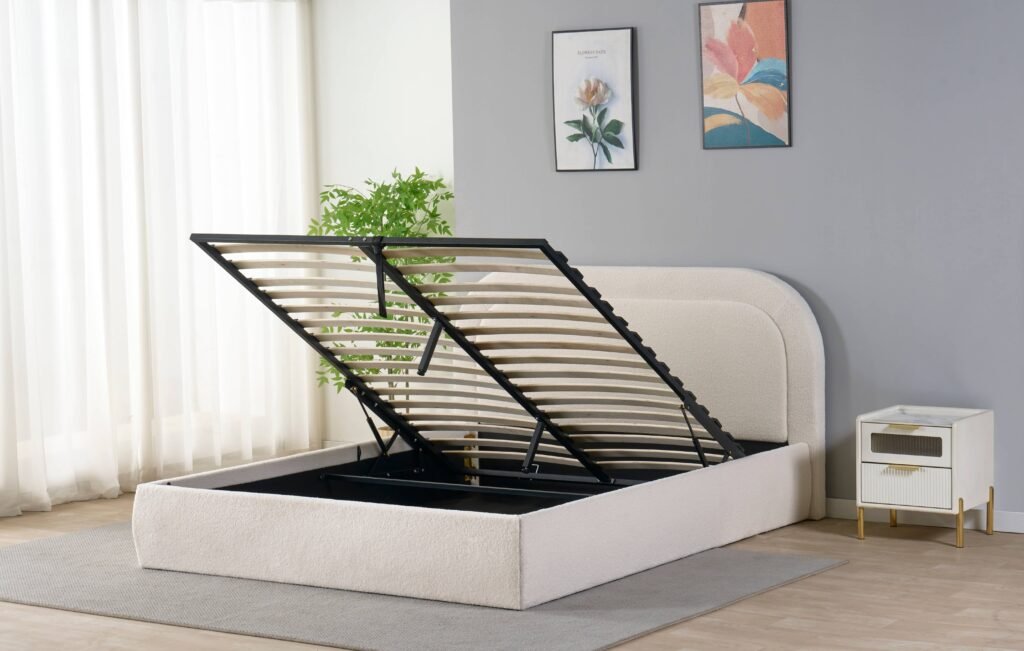 Configurable
Rounded Headboard Gas Lift Storage Bed
Use the rounded headboard to add a softer contemporary direction to a gas-lift storage-bed range.
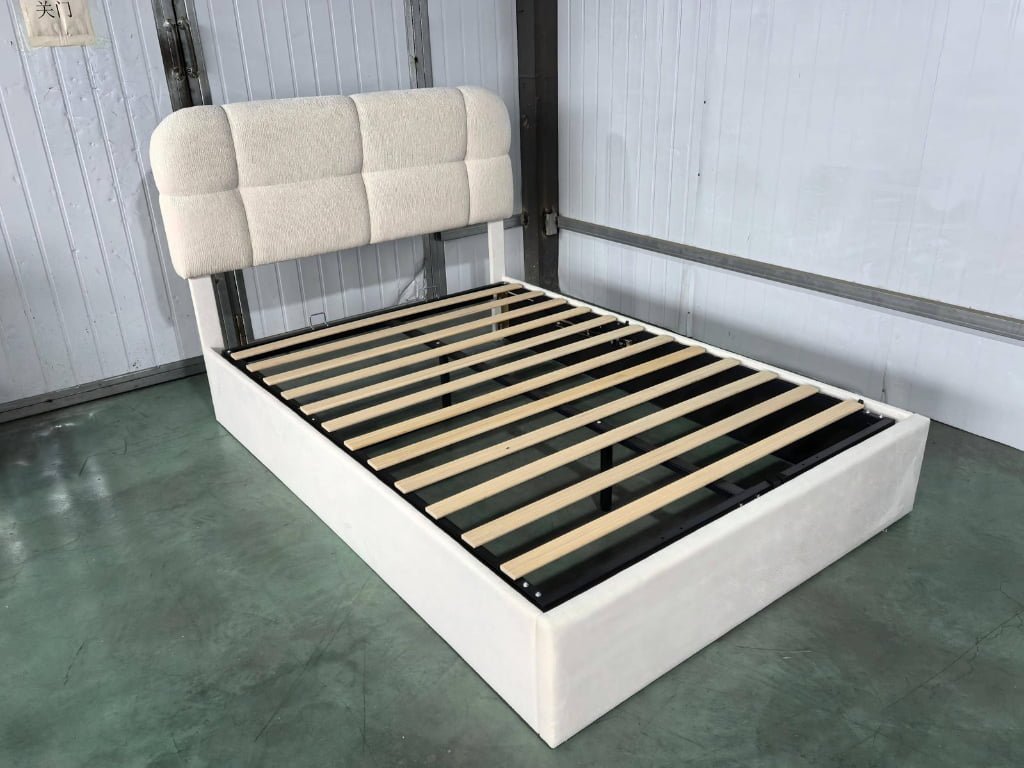 Configurable
Adjustable-Height Gas Lift Storage Bed
Use the adjustable-height headboard to accommodate different mattress heights and retail specifications without creating a separate bed design...
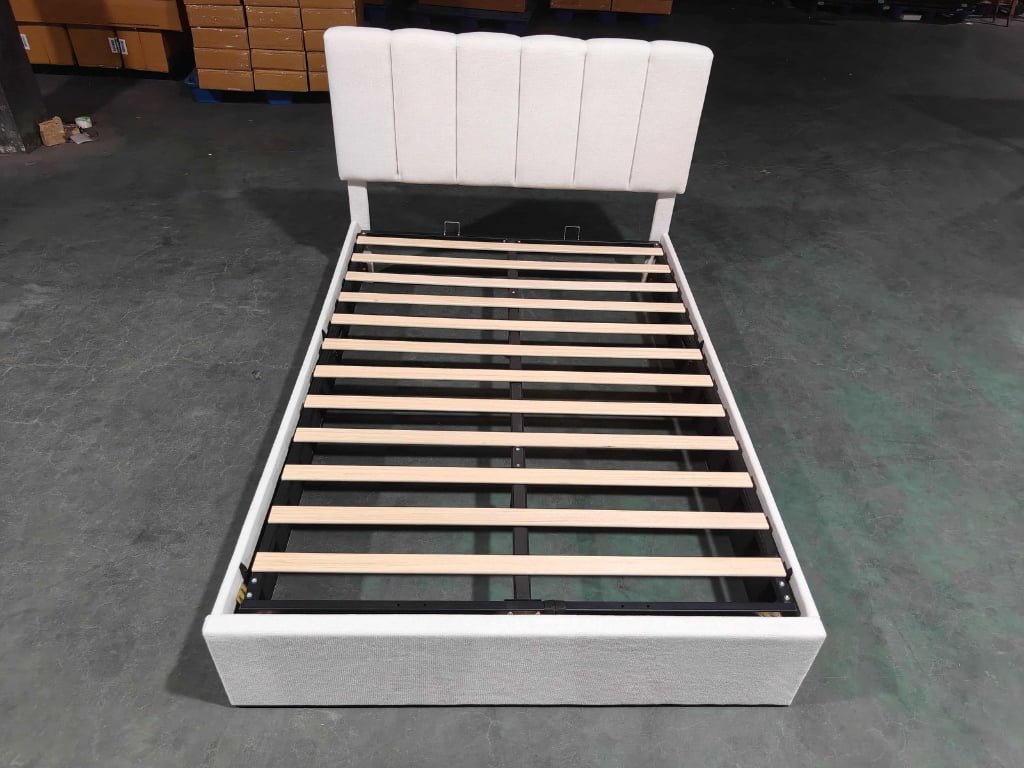 Configurable
Wide-Channel Adjustable Gas Lift Storage Bed
Use the broad adjustable channel headboard to create a distinct storage-bed SKU while retaining flexibility for different mattress...
 Configurable
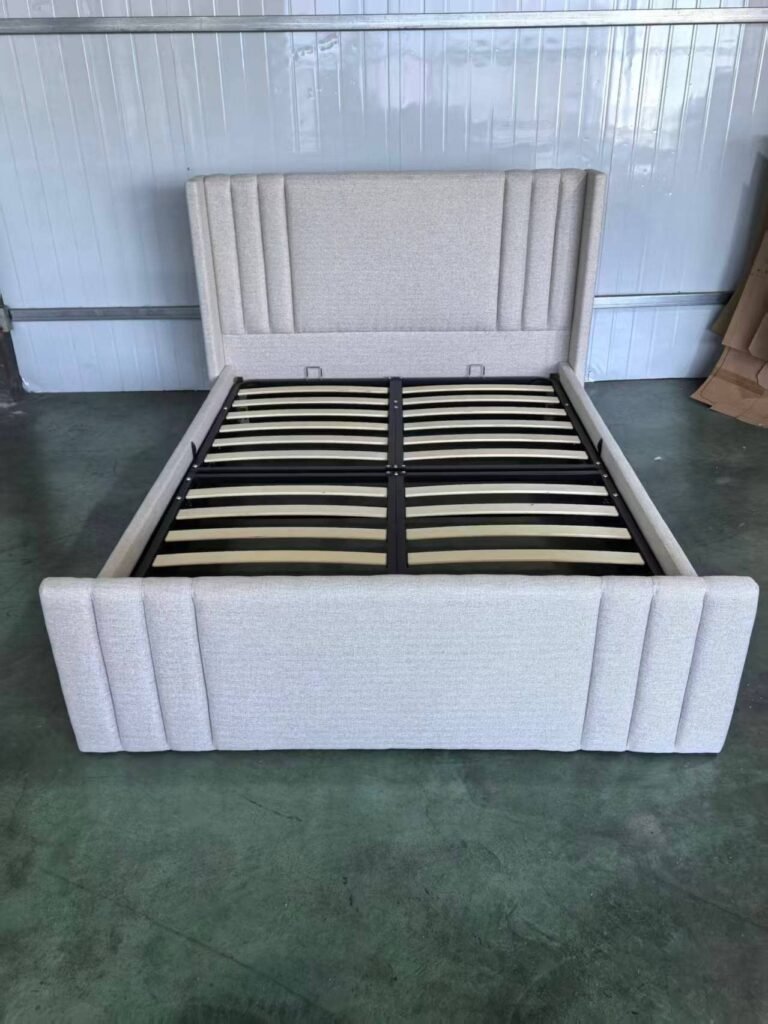
Tall Winged Upholstered Bed Frame
Use the tall winged headboard to create a stronger upholstered-bed statement with practical gas-lift under-bed storage. Two common...
 Configurable
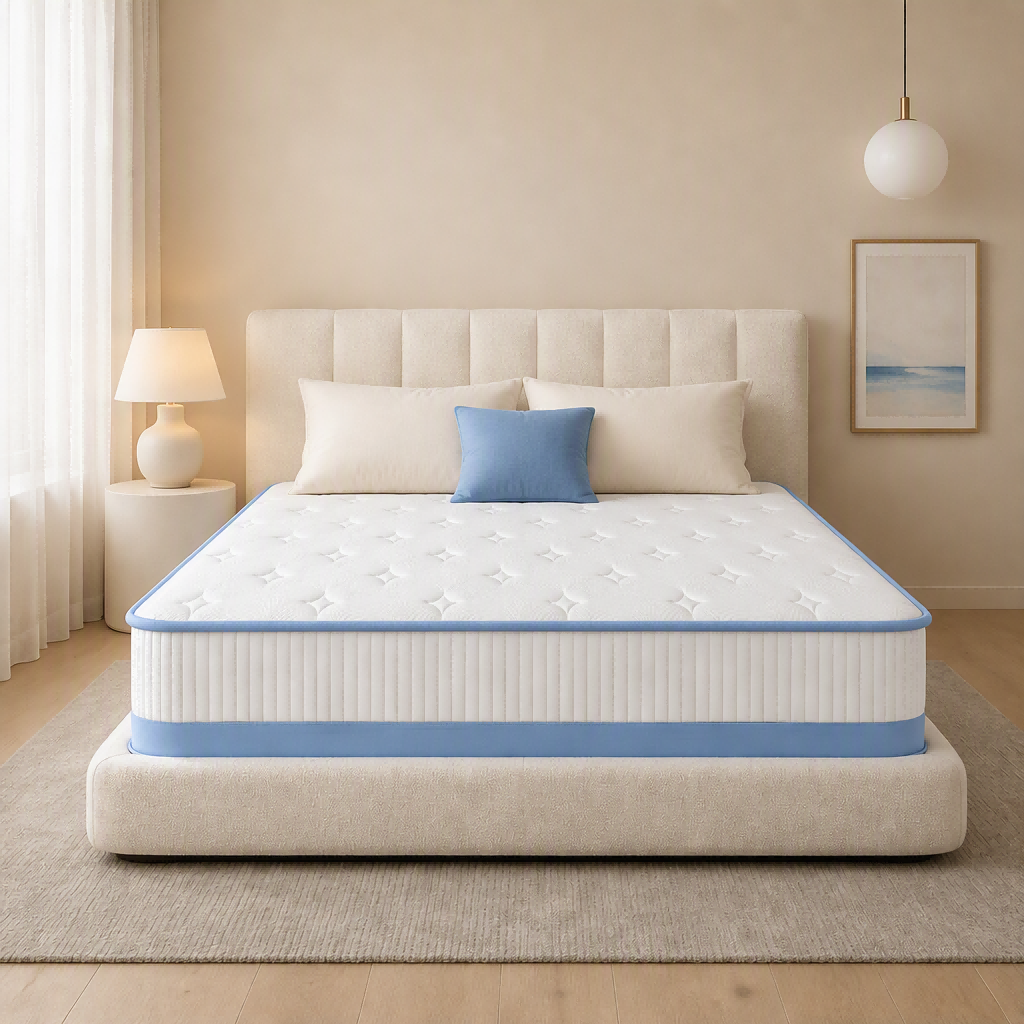
Double-Sided Hybrid Mattress
Build a roll-packed hybrid mattress range around a double-sided comfort concept with a 16 cm pocket-spring core.
Adjacent sourcing resources
Guides that support this planning process.
How We Control Your Order From Approval to Shipment
A clearer B2B buying processFrom product brief to shipment, know what happens next.See how we confirm...
How to Plan the Right Product Mix for Your First Container
Buying Guide Container Planning B2B Import First container SKU planning Plan yourfirst containerwith precision. A structured...
What Online Furniture Retailers Should Confirm Before Ordering Beds
E-Commerce & DTC Supply Chain Solutions Beds Engineered for Parcel Delivery, Quick Assembly & Zero-Return Growth....
How to Qualify a Second Bed Supplier Without Rebuilding Your Range
B2B Sourcing Strategy Your secondsupplier,ready. Reduce single-source risk with a factory that can align to your...
What Product Files Can We Prepare for Your Retail Order?
B2B Retail & Supply Chain Enablement Assembly Manuals, KD Engineering & Retail-Ready Content Files We deliver...
How We Handle After-Sales Issues and Spare Parts
B2B Post-Shipment Framework Structured after-sales. Zero commercial friction. A documented protocol for warranty remedies, batch traceability,...
Start your container plan
Ready to build a specification-led first container?
Share your target market, sales channel, and product direction. The reply will focus on the relevant models, sizes, MOQ, loading basis, and next confirmation step--not a generic price list.
