
Assembly Manuals, KD Engineering & Retail-Ready Content Files
We deliver complete technical documentation, localized step-by-step manuals, exploded hardware schedules, and high-fidelity media packages before your container reaches port--minimizing last-mile returns and assembly friction.
- ✓ 1:1 Hardware Scale Chart (100% blister count)
- ✓ Multi-Language Vector PDFs (EN / DE / FR)
- ✓ Studio 3D Cutaways & Stop-Motion Videos
- ✓ E-Commerce Clean Layer Cutouts & A+ Layouts
What Digital & Physical Files Can We Prepare for Your Orders?
For online furniture retailers and catalogue importers, product data completeness directly impacts listing conversion, warehouse intake velocity, and customer support volume.
Assembly & Maintenance Manuals
Clear exploded views, part numbering tags, safety warnings, and step-by-step guidance formatted with your brand typography and logos.
E-Commerce Studio Imagery
Pure white background cutouts (RGB 255/255/255), detail close-ups of stitching and gas-lift mechanisms, and dimension overlay schematics.
Assembly & Mechanism Video
Factory live-action assembly walkthroughs, 3D animated KD slot-in demonstrations, and gas-piston safety troubleshooting clips.
Carton Markings & Barcodes
Pre-approved Master carton shipping marks, EAN-13 / UPC barcode placements, multi-box set indicators (Box 1 of 2), and ISTA drop test icons.
KD Architecture Designed to Prevent Returns
Online retail furniture fails most frequently at customer assembly. Our KD frames utilize symmetrical bracket designs, pre-installed threaded inserts, and color-coded blister packaging so non-technical end-users succeed on the first try.
Pre-Fitted Corner Brackets
Side rails slide directly onto headboard corner cleats before bolt tightening, eliminating awkward balancing acts.
Blister Pack + 5% Redundant Spares
All bolts (M8/M6), washers, and Allen wrenches are sealed in indexed blister trays with spare hardware explicitly marked.
Pre-Assembled Gas Lift Cylinders
Heavy-duty pistons feature factory-tested torque retention with explicit safety lockout instructions printed on the unit.

How We Structure Your Customer-Facing Assembly Manual
Every booklet undergoes real factory trial assembly with third-party testers to verify clarity, bolt alignment, and readability before mass print.
Parts & Hardware Master Schedule
Identifies parts by clear letters (A-Z) and hardware by numbers (1-12). Contains 1:1 scale silhouettes for bolt sizing to prevent cross-threading.
Perimeter Rail & Headboard Lock
Shows side rail cleat engagement, footboard bracket mating, and initial hand-tightening torque rules to prevent skewed frames.
Centre Rail & Adjustable Leg Leveling
Illustrates centre beam installation and floor-glide leveling instructions to eliminate creaking on uneven household flooring.
Gas Lift / Storage Platform Mount
Special highlight diagrams for gas-strut orientation, safety pin locks, and initial mattress weight requirements for first decompression.
Curved / Straight Slat Array
Snap-in plastic cap guide for sprung birch/poplar slats or pre-webbed roll-out slat arrangements with zero-measurement placement.
Fabric Care & Compliance Data
Cleaning codes for velvet, boucle, or linen upholstery, safety warnings, batch traceability codes, and manufacturer support QR codes.
Reference Models & Associated Product Documentation
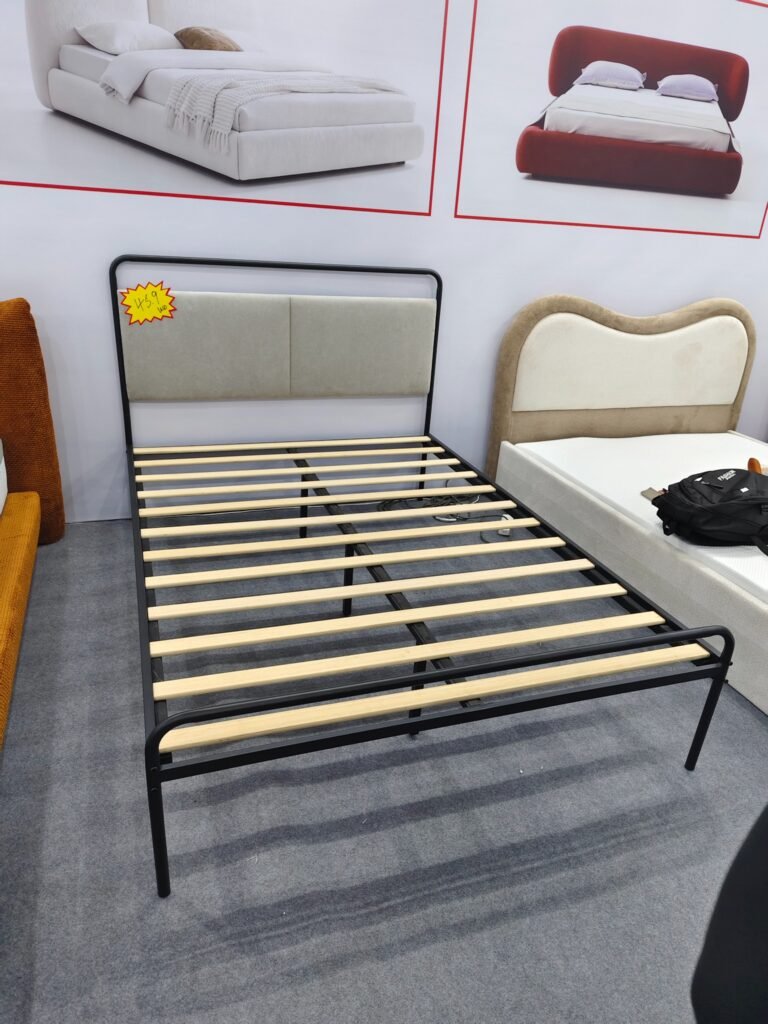 UF-Metal-Bed
Metal Bed with Upholstered Headboard
Metal bed frame with an upholstered headboard and clearly defined tube specifications. The current quotation uses 1.0 mm tube for the main structural areas and main legs, 0.8 mm tube for the middle supporting legs, with size-specific CBM, 40HQ loading and FOB references for procurement planning.
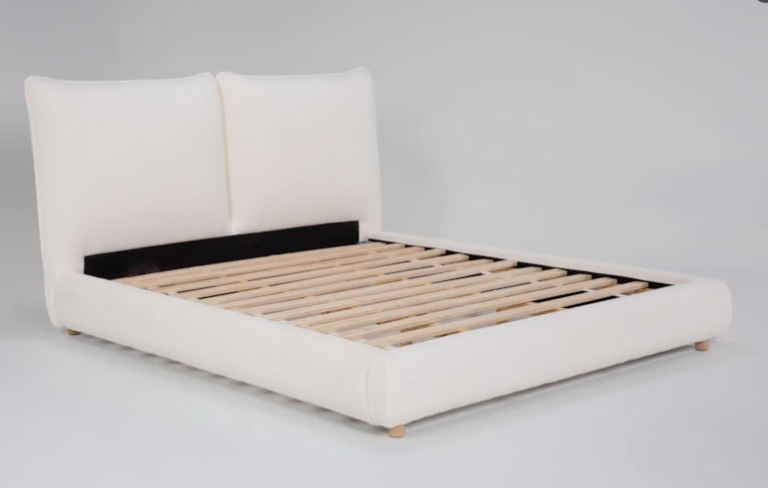 LO-03
LO-03
Curved Double-Cushion Gas Lift Storage Bed
A curved upholstered headboard with a gas-lift storage base for retail and import programmes. The reference model uses 14 rows of straight wood slats and ships in two cartons, with size-specific CBM and 40HQ loading data for order planning.
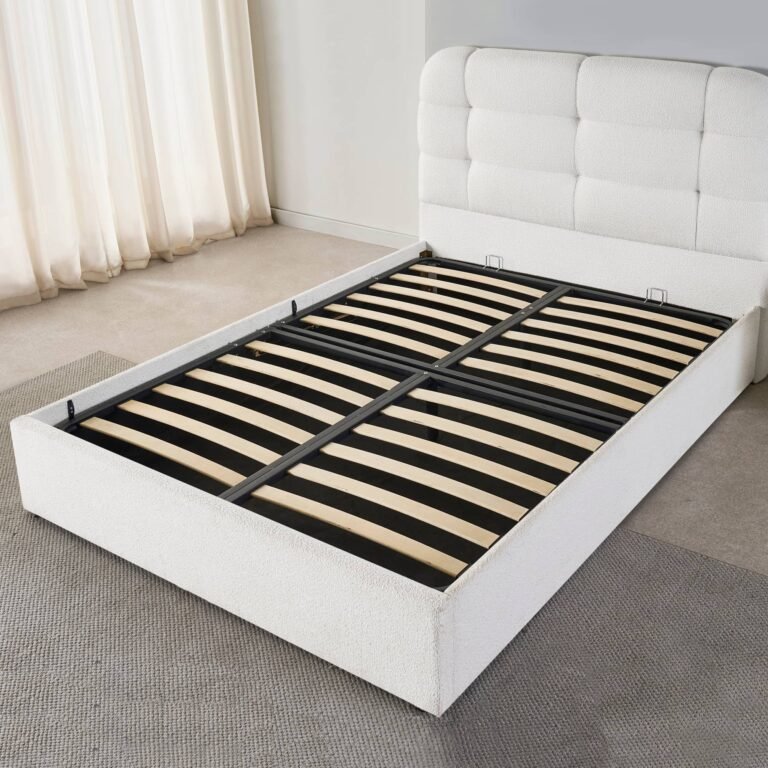 LB-151
Rounded-Channel Gas Lift Storage Bed
A rounded-channel upholstered headboard paired with a folding gas-lift storage base for retail and import programmes. The reference build uses 12 rows of curved wood slats, two centre bars and a two-carton pack, with loading data for four mattress sizes.
 P-101
P-101
Extra-Tall Panel Upholstered Bed Frame
A non-storage upholstered bed built around a 1610 mm panel headboard, 15 rows of curved wood slats and 50 mm wooden legs. Three mattress sizes are available with size-specific CBM and 40HQ loading references.
Commercial & Technical Support
Frequently asked questions from merchandising directors, quality managers, and e-commerce listing specialists.
We provide localized vector layouts in English, German, French, Spanish, and Dutch before mass packing.
Can we put our own retail branding and customer service hotline on the manual? ↓
Yes. We supply 100% white-label documentation. Provide your logo vector files, brand guidelines, warranty statement, and customer service email/QR code. Our in-house technical documentation team will output high-resolution print-ready files for inclusion in Box 1.
How do you ensure hardware bags don't arrive with missing bolts? ↓
All screws, washers, and bolts are packed using automated visual weight-sensor blister packaging. We add an automatic +5% spare hardware allotment in a dedicated red-colored blister cell. Every master carton has a QA hardware weigh-in gate prior to final strapping.
When do we receive the e-commerce photography and 3D rendering pack? ↓
Once the Golden Sample is approved and production deposit is placed, our studio generates high-resolution white background cutouts, dimensions schematics, and marketing copy packages within 10-14 working days--giving your merchandising team ample lead time before container arrival.
Do you provide carton drop-test documentation (ISTA 1A / 3A)? ↓
For online retail (parcel / mail-order delivery), we engineer 5-layer double-wall corrugated cartons with honeycomb side buffers and corner caps. We provide photo and video drop-test reports verifying structural survival up to standard transit impact protocols.
Request Manual Samples & Retail Asset Starter Kit
Tell us your target bed frame or mattress program. We will send sample PDF assembly schematics, exploded BOM templates, and carton specification guides tailored to your destination market.